Case study · Contactor · Repair company, Denmark / USA
Arc-Damaged LC1F780 Contactor Restored in One Week — Obsolete Coil Included
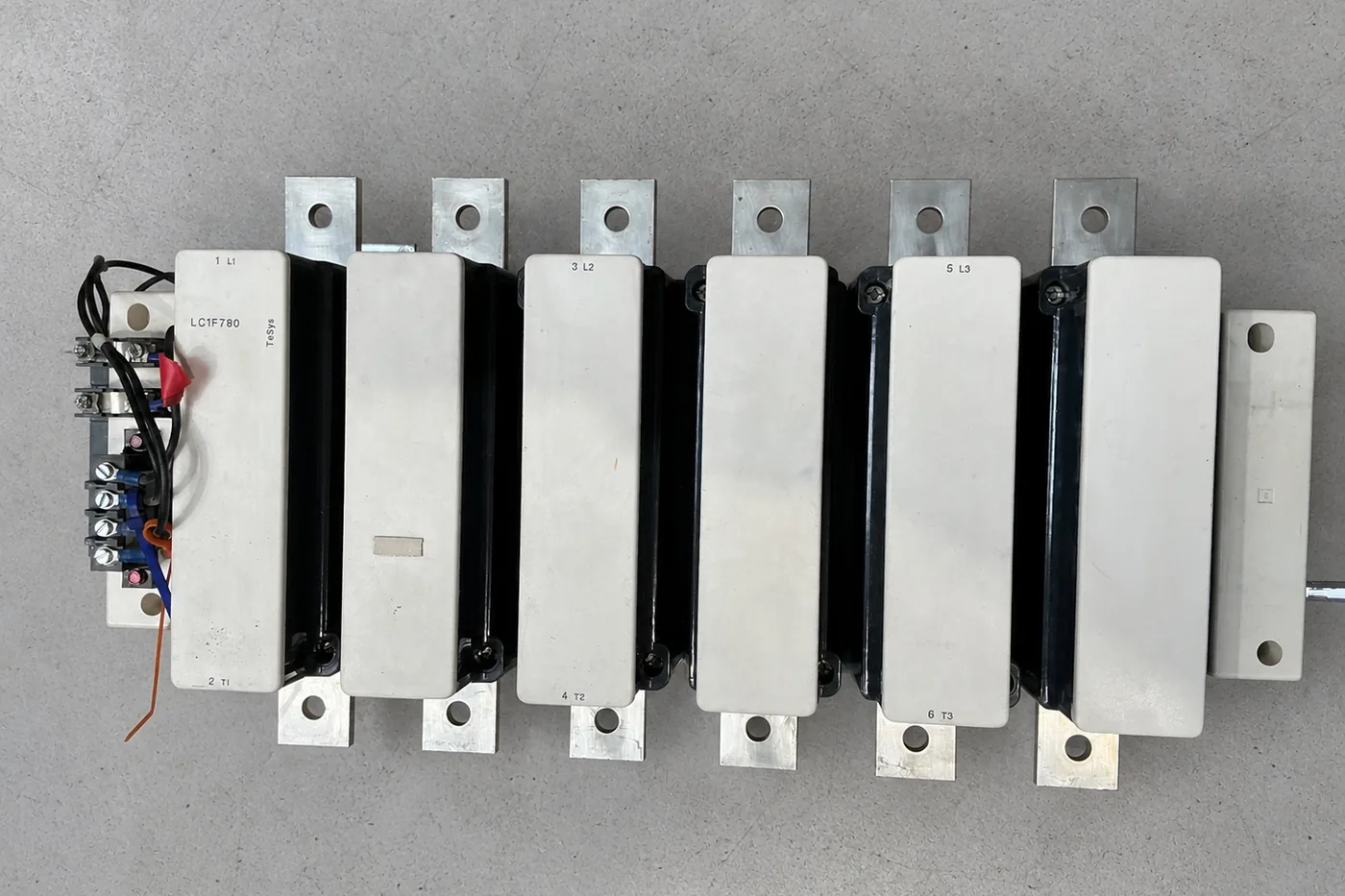
A Schneider TeSys F LC1F780 contactor — a 780 A frame — arrived from a repair company operating in Denmark and the United States with severe arc-flash damage: carbon contamination throughout, copper terminals welded together, the unit dead. It went back one week after it arrived, contacts separated, re-plated and restored, a coil replaced on a contactor the manufacturer no longer supports, looking like a new unit — with the import and export handled so the customer's job was a small repair, not a logistics project.
- UnitSchneider TeSys F LC1F780 · 780 A
- FaultArc flash · welded terminals · carbon
- Turnaround1 week, arrival to dispatch
- OutcomeReturned as new · obsolete coil replaced
Case file
Summary
As received
Welded shut, black with carbon, and out of production
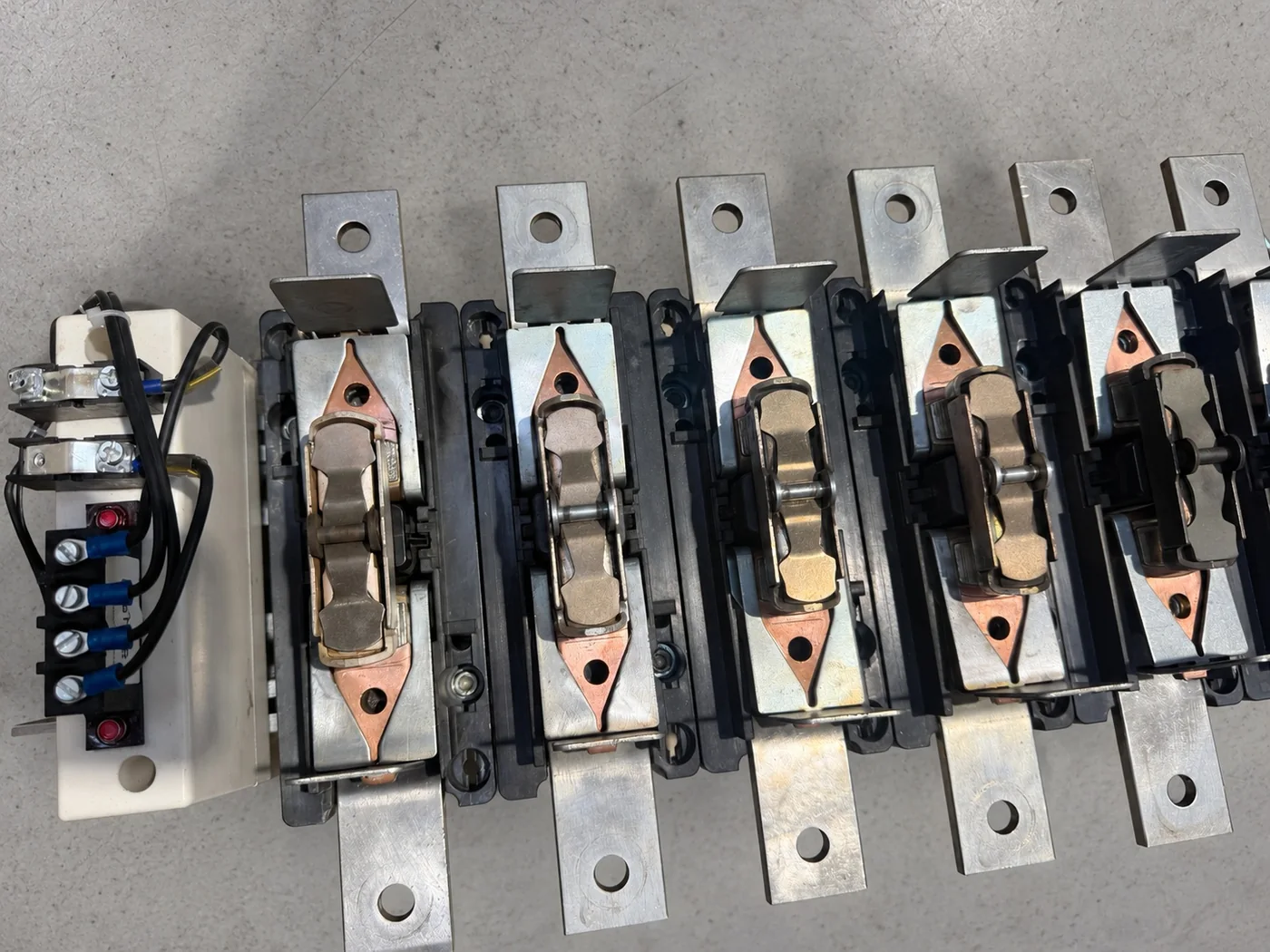
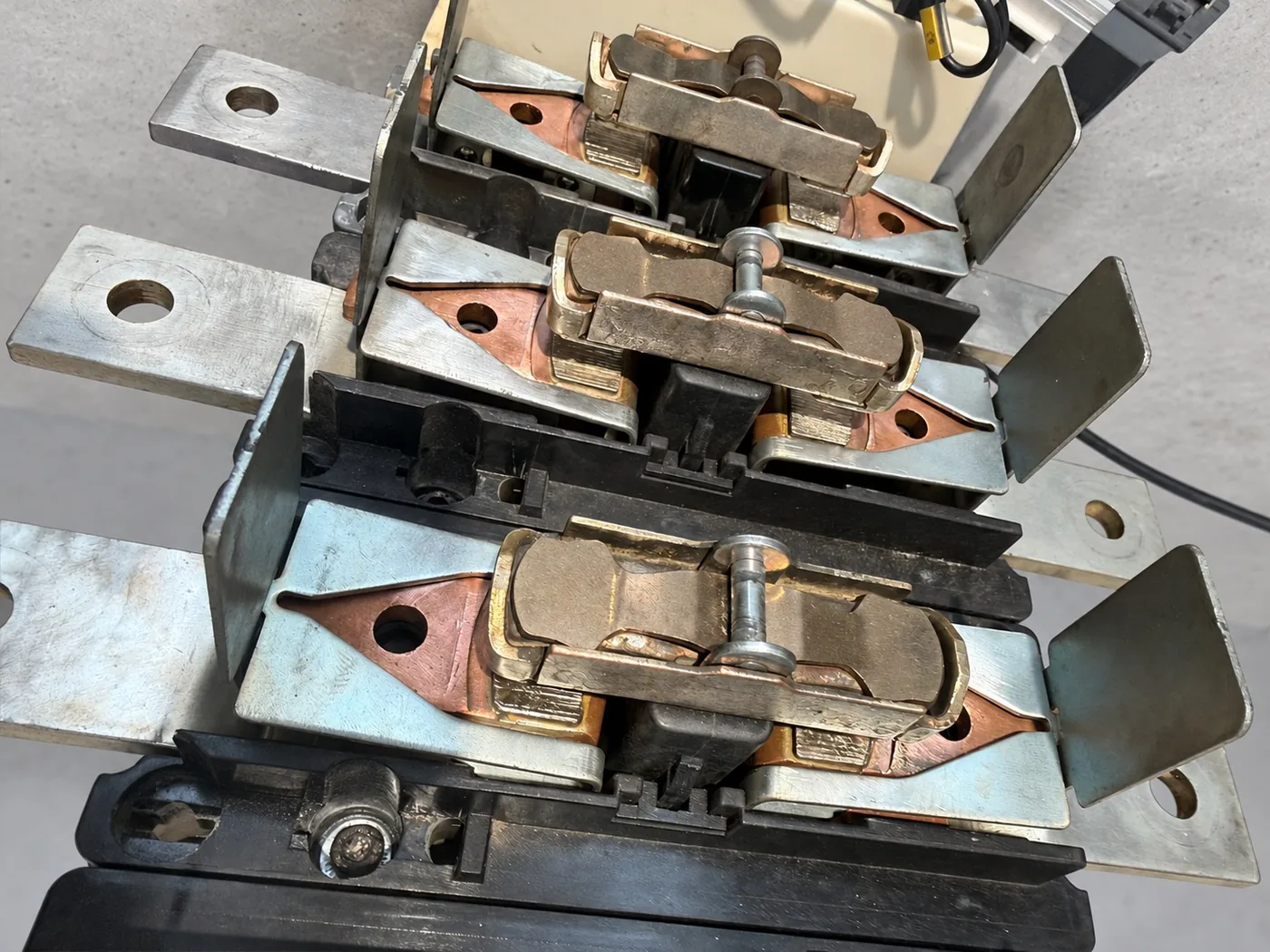
An arc flash inside a contactor does two things. It dumps carbon over every insulating surface — pole carriers, arc chutes, the moulding between phases — and it melts the contact faces so that, when the arc clears, the copper has fused. This one had both. The terminals were welded together, the pole assemblies were blackened end to end, and the contactor would not operate.
The complication was the frame. The LC1F780 is obsolete, so the customer's normal answer — order a new one — was a long lead time on a discontinued part, or an engineering change to fit a current replacement. For a repair company sending work between Denmark and the United States, either route meant a job stalled for weeks.

The work
Down to components, and back up in a week
Break down to individual components
Pole assemblies, contact carriers, springs, arc chutes, magnet and coil all off the frame. Nothing cleaned in place — carbon hides in every joint.
Clean every part
Carbon removed from every moulding and metal surface, then the insulation checked for tracking before any part went back.
Separate, re-plate and restore the contacts
The welded contact faces separated, dressed back to true, re-plated and restored so the poles would carry rated current without heating.
Replace the failed coil
One internal coil had failed. Obsolete range or not, a coil was sourced and fitted and the magnet faces cleaned so the contactor pulls in cleanly without chatter.
Rebuild and test
Reassembled, then proved on the bench: pick-up and drop-out voltage, contact resistance per pole, insulation resistance, coil current and mechanical operation — recorded on the certificate.
Export and return
Dispatched one week after arrival, with the return shipment and customs paperwork handled by us.
Outcome
A small repair, not a replacement project
The contactor went back ready to fit — same frame, same footprint, same terminations, no engineering change. The customer avoided a discontinued-part lead time and the cost of a replacement, and because the import and export were handled at our end, what could have been a shipping exercise across two countries was a single repair order with one supplier.
One week, door to door in the workshop. That is what an obsolete contactor should cost you.
LC1F contactor repair · Contactor repair & overhaul · Repair for US operators
Get started
Tell us about the breaker
Make, model and rating from the nameplate, plus a description of the fault. We'll come back with a clear recommendation and a fixed price — usually the same working day.
- Workshop & office01977 253063
- Out of hours07496 013884
- Email & photosinfo@circuitbreakerrepair.co.uk
- WorkshopUnit 13–17 Dale Court, Pontefract, West Yorkshire WF9 3FL